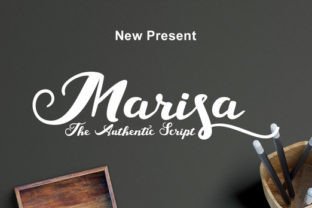
Marisa: The Calligraphy Typeface That Elevates Handmade Goods
There is a specific kind of quiet satisfaction that comes from peeling a fresh sheet of vinyl off the cutting mat, or watching a stack of matte cardstock slide out of the printer with your latest design crisp and ready. Last weekend, I was deep in production mode for an upcoming holiday market, tasked with creating labels for a local candle maker's new "Winter Solstice" collection. I needed something that felt intimate yet sophisticated, a script font that could carry the weight of a premium brand without looking stiff or over-designed. That is when I pulled up Marisa from my library of design assets. As soon as those sweeping strokes appeared on the screen, I knew the search was over. This typeface has a way of transforming simple text into art, instantly adding that layer of authentic charm that handmade customers crave.
Marisa is more than just a pretty set of letters; it is a gorgeous calligraphy script font available through Script Amp that bridges the gap between traditional penmanship and modern packaging design. Its high-contrast nature gives it a dynamic rhythm, where thick downstrokes meet delicate hairlines to create a sense of movement and elegance. For crafters and small shop owners, this visual personality is invaluable. It speaks of care, attention to detail, and a touch of luxury. Whether you are designing wedding invitations, boutique clothing tags, or printable wall art, Marisa brings a mood of celebration and warmth that resonates deeply with audiences looking for something special.
Bringing Labels and Packaging to Life
In the world of physical products, first impressions are often made before the item is even touched. The label on a jar of honey, the tag on a linen tote bag, or the sticker sealing a bakery box acts as the silent ambassador for your brand. Using Marisa for these applications can significantly elevate the perceived quality of your goods. Because it is a display font at heart, it shines brightest when used for short phrases, product names, and decorative wording.
For my candle label project, I paired Marisa with a clean, geometric sans serif font for the ingredient list and burn instructions. This font pairing strategy is crucial. While Marisa handles the emotional heavy lifting with its beautiful loops and swashes, the supporting sans serif ensures readability for the practical details. This combination creates a balanced brand identity that feels both artistic and professional. When I applied the final labels to the amber glass jars, the contrast of the black ink against the texture of the paper, rendered in Marisa's elegant script, made the candles look like they belonged in a high-end boutique rather than a craft fair table.
Beyond labels, this commercial font is exceptional for packaging elements. Imagine using it for the "Thank You" note tucked inside a shipment of handmade jewelry, or printing it on tissue paper wrappers for artisanal soaps. These small touches build customer recognition and foster an emotional connection. When a buyer sees consistent, beautiful typography across your social media graphics, your website, and your physical packaging, it reinforces trust and establishes your shop as a serious, creative business.
Perfect for Stationery and Special Occasions
If you are a stationery designer or an invitation creator, you know that the right typeface can make or break a suite. Marisa is particularly well-suited for special occasion designs. Its authentic calligraphic feel makes it a natural choice for wedding invitations, save-the-dates, and menu cards. The fluidity of the letters mimics the look of hand-lettering, offering couples and event planners a custom look without the custom price tag.
I recently tested Marisa on a set of digital birthday invitations intended for print-on-demand services. The font's versatility allowed me to use different weights and styles within the family to create hierarchy. I used the standard style for the main greeting and utilized the alternate characters to ensure that repeated letters, like the double "l" in "Hall," didn't look repetitive or mechanical. This attention to typographic detail is what separates amateur designs from professional ones. For editorial design projects like planner pages or journal covers, Marisa adds a personal, handwritten touch that encourages users to engage with the product creatively.
For those creating seasonal products, such as Christmas ornaments, Valentine's Day cards, or Mother's Day prints, Marisa offers a timeless appeal. It avoids trendy gimmicks that might date your work, ensuring that your digital downloads and physical goods remain relevant year after year. Whether it is a farmhouse sign reading "Gather" or a nursery print with a child's name, the font's graceful curves add a softness that fits perfectly into home decor trends.
Technical Tips for Makers and Sellers
While Marisa is undeniably beautiful, using it effectively requires a bit of technical know-how, especially when working with cutting machines like Cricut or Silhouette. Because it is a high-contrast script font, the thin hairlines can sometimes be delicate when cutting intricate materials like heat transfer vinyl (HTV) for shirts or mugs. When preparing files for physical merchandise, always do a test cut on a scrap piece of material. You may need to adjust the pressure settings on your machine or slightly thicken the lines in your vector software if you are working with very small sizes.
Readability is another key factor. Marisa is designed for display use, meaning it is best reserved for titles, logos, and short headlines. It is not ideal for long blocks of body text, especially on small product labels or mobile screens. To maintain clarity, ensure there is ample leading (line spacing) if you must stack lines of text, and avoid using it at sizes smaller than 8 points for print, or roughly 14 pixels for web, unless it is purely decorative.
Before launching any product line featuring Marisa, it is essential to review the licensing terms provided by Script Amp. Most premium fonts come with specific guidelines regarding commercial use, especially for digital templates where the end-user might modify the text. Ensure you have the correct license for selling physical items like t-shirts and mugs versus selling editable templates on platforms like Etsy or Creative Market. Additionally, take time to explore the full character set. Many modern creative fonts include ligatures, swashes, and multilingual support that can add unique flair to your designs. Experimenting with these alternates can help you create one-of-a-kind logos and monograms that set your shop apart.
Ultimately, incorporating Marisa into your workflow is about more than just choosing a pretty font; it is about curating an experience. From the moment a customer sees your listing image to the unboxing of their purchase, the typography you choose tells a story. With its blend of classic calligraphy and contemporary style, Marisa provides the perfect voice for makers who want their work to feel authentic, heartfelt, and beautifully crafted.